
Special Assistance
Travelling with Pets
Your pet is part of the family. Whether you're taking your furry friend on holiday or bringing them home, here's everything you need to know about flying together.
At a Glance
Quick Facts
The essentials before you start planning.
The Basics
- Accepted animals: Dogs and cats (cabin or hold). All other animals via Cargo only.
- Snub-nosed breeds: Accepted in cabin only (not in hold) — see breed details in Specifications below.
- Only adult passengers may travel with pets.
- Fees: €50–€200 depending on route and cabin/hold. Dubai cargo transport priced separately.
- Booking: At least 24 hours before departure.
- How to book: Online at cyprusairways.com or call +357 24 000 053.
What to Provide When Booking
- Pet type (dog or cat)
- Pet weight (including carrier for cabin)
- Carrier or container dimensions
- Your destination and flight number
- Whether cabin or hold transport
- Any relevant health documents (pet passport, vaccination records, microchip number)
Travel Options
Pets in Cabin & Hold
Choose the right option based on your pet's size and weight.
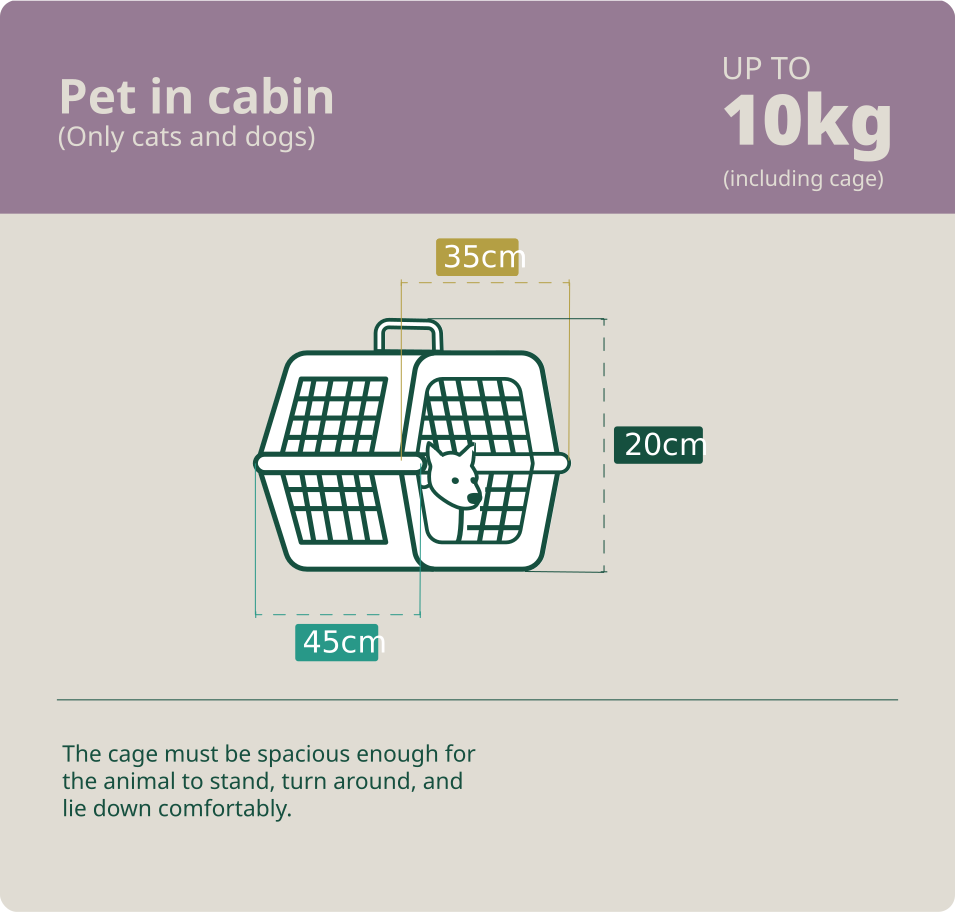
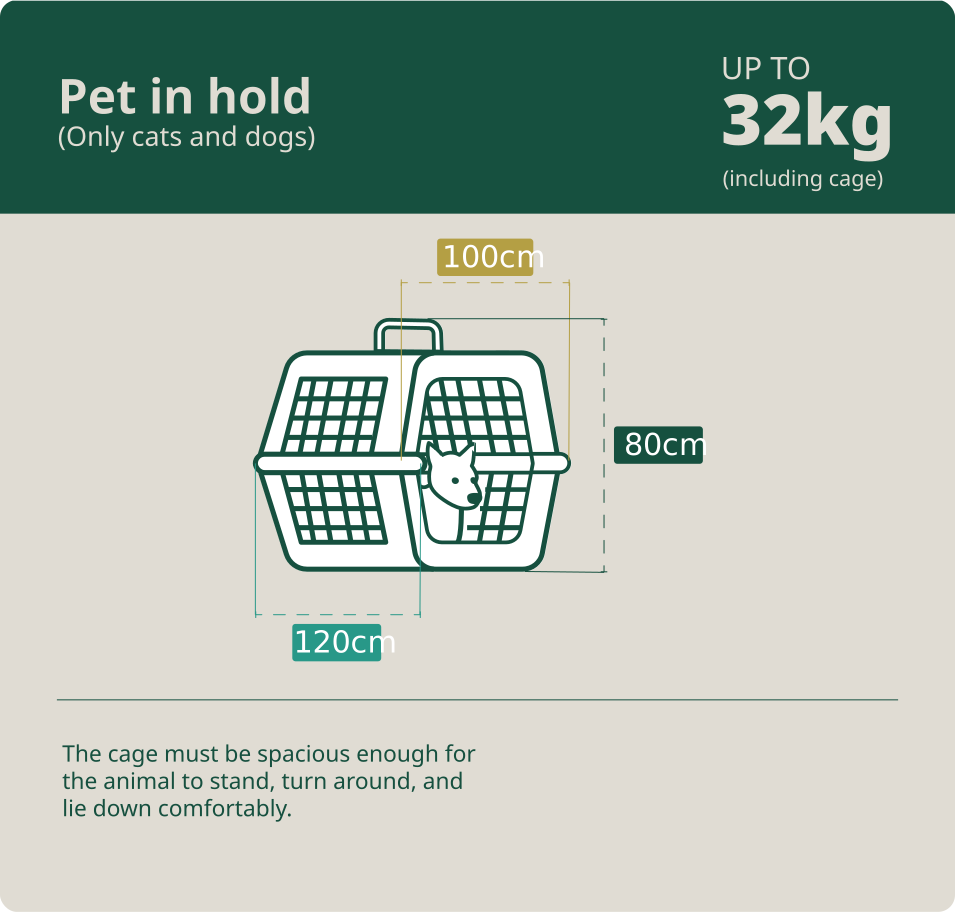
Pet fees are in addition to your baggage allowance. Strong/large breed dogs must travel in reinforced kennels conforming to IATA Container Requirement 82 — see Specifications below for breed list.
Prohibited Breeds by Country
Some dog breeds are banned from entry under local law. These breeds (and their crossbreeds) are prohibited from importation/transit to the below countries.
Cyprus
- Pit Bull Terrier / American Pit Bull
- Japanese Tosa / Tosa Inu
- Dogo Argentino
- Fila Brasileiro
Israel
- Pit Bull Terrier
- American Staffordshire Terrier
- Bull Terrier
- Staffordshire Bull Terrier
- Rottweiler
- Dogo Argentino
- Japanese Tosa
- Fila Brasileiro
Other countries may have their own breed restrictions. Always check your destination country's regulations before travelling with your pet.
Before You Travel
Preparing Your Pet
Three steps to get ready before your flight.
Health Requirements
- Your pet needs to be in good health and fit to travel
- Pregnant animals require a veterinary certificate confirming fitness to travel and no risk of birth during the journey
- Animals that gave birth in the last 48 hours cannot travel
- Puppies/kittens under 12 weeks: require vet certificate confirming rabies vaccination
- Animals under 105 days old cannot travel
Required Documents
- Pet passport
- Vaccination records
- Microchip documentation
- Health certificate from your veterinarian
- Import permits (check with destination country's agricultural authority)
Requirements vary by destination. Always check before travel.
Detailed Information
Specifications & Policies
Expand any section below for full details on carrier requirements, airport procedures, and special cases.
- Cabin carrier requirements
The carrier must be suitable for air travel and in good condition. It must allow your pet to stand, turn around, and lie down comfortably, and have adequate ventilation on 4 sides of the container. The carrier must close securely so your pet cannot escape. The bottom must be lined with absorbent, leak-proof material.
Maximum dimensions: 45 × 35 × 20 cm
Maximum total weight (pet + carrier): 10 kgThe carrier must be placed under the seat in front of you. It cannot be placed near emergency exits, in aisles, or in overhead lockers. Your pet must remain inside the closed carrier at all times during boarding, taxiing, the entire flight, and disembarkation.
Soft-sided carriers are permitted. The carrier must display a Live Animal label without blocking ventilation openings.
- Hold container requirements (IATA)
Animals are accepted in the hold only in containers that comply with current IATA regulations. Containers must be made of firm plastic or metal, strong and secure, with adequate ventilation on all four sides (minimum 16% of the total surface area). They must be large enough for the animal to stand, turn around, and lie down comfortably. A reliable, secure lock is required. The floor must be lined with absorbent, watertight material.
Not accepted: hand-made containers, containers made entirely of welded mesh or wire mesh, and cardboard cat boxes.
A water bowl must be securely attached inside and refillable from outside without opening the container. If the container has wheels, they must be removed or disabled.
Sharing containers:
- Up to 2 adult animals may share one container if each weighs no more than 14 kg and they are compatible
- Animals over 14 kg must be in separate containers
- Up to 3 young animals of the same species (under 6 months) may share a single container
- Snub-nosed (brachycephalic) breeds
Snub-nosed (brachycephalic) breeds have difficulty breathing and cooling down during air transport. For their safety, Cyprus Airways does not accept snub-nosed breeds in the aircraft hold. They may travel in the cabin only, provided they meet all PETC requirements (max 8 kg pet weight, 10 kg total including carrier).
This restriction applies to all crossbreeds of the listed breeds.
Snub-nosed dog breeds
- Affenpinscher
- Bandog
- Boston Terrier
- Boxer (all breeds)
- Brussels Griffon
- Bulldog (all breeds)
- Chow Chow
- Dogue de Bordeaux
- English Toy Spaniel
- Japanese Spaniel (Chin)
- Lhasa Apso
- Mastiff (all breeds)
- Mastino Napoletano
- Pekingese
- Presa Canario
- Pug (all breeds)
- Shar Pei
- Shih Tzu
- Tibetan Spaniel
- Bull Terriers
Snub-nosed cat breeds
- British Shorthair
- Burmese
- Exotic Shorthair
- Himalayan
- Persian
- Scottish Fold
If your pet's breed is not listed above but is classified as snub-nosed, the same restrictions apply. On codeshare flights, the operating carrier's rules apply.
- Strong and dangerous breed dogs
The following breeds (and crossbreeds) are accepted for transport but must travel in reinforced kennels conforming to IATA Container Requirement 82 (CR82). Dogs aged 3 to 6 months or weighing up to 10 kg are exempt from the reinforced container requirement.
- Pit Bull Terrier
- American Pit Bull
- American Bulldog
- Japanese Tosa / Tosa Inu
- Dogo Argentino
- Argentinian Mastiff
- Fila Brasileiro / Brazilian Mastiff
- Rottweiler
- American Staffordshire Terrier
- Staffordshire Bull Terrier
- Ovcharka
- Karabash
Cyprus Airways reserves the right to require a CR82 crate for any breed not listed above, if deemed necessary for flight safety.
CR82 container requirements: solid wood or metal frame, metal or solid wood sides, welded mesh front with sliding shutter, reinforced ventilation, and secure locking mechanisms. Contact us on +357 24 000 053 for full CR82 specifications.
Note: Some breeds on this list may also be prohibited from entry into certain countries under local law. Always check your destination country's breed regulations before booking.
- At the airport & your responsibility
Arrive well in advance to complete all formalities. At check-in you will need to present all pet documentation, show your pet to airline staff for a health inspection, confirm your container or carrier specifications, and confirm your pet meets travel requirements.
Staff will verify that your pet appears fit to travel, the container meets requirements, all documents are in order, and the pet weight is correct.
Pregnant animals must have a veterinary certificate confirming fitness to travel with no risk of birth during the journey. Animals that gave birth in the last 48 hours are not accepted.
Your responsibility: You are fully responsible for your pet's comfort, behaviour, and any damage caused during the flight, and for ensuring all required documentation is in order. Governmental regulations of the destination country may impose additional conditions.
Tips: Consult your veterinarian before travelling. Check destination country requirements at least one week before travel. Arrive at the airport well in advance.
- During the flight
Cabin: Your pet must remain in the carrier for the entire flight and must not disturb other passengers. You are responsible for keeping your pet calm and secure.
Hold: Your pet travels in the aircraft hold and arrives with your baggage. The container must meet IATA specifications. Include a food and water bowl securely attached to the container, absorbent pads, and comfort items such as a blanket or toy.
What to bring (cabin): carrier, leash and collar, muzzle if needed, water in a non-spill container, absorbent pads, any medication your pet needs.
Food and water: Pets generally do not need food for 12 hours after departure. For cabin pets, you may provide water in a non-spill container. For hold pets, attach a secure water bowl with absorbent pads to manage spills.
- Guide dogs and assistance dogs
Requirements: You must have a certificate confirming the dog's special training. The guide dog must be from an organisation that is a member of the International Guide Dog Federation (IGDF) or Assistance Dogs International (ADI).
In the aircraft: Your guide dog must wear a muzzle and leash. The dog is tied to the chair at your feet. An extra seat will be reserved next to you (subject to availability) at no additional charge.
Booking: Passengers with guide dogs are classified as requiring special assistance and cannot book tickets online. Please call +357 24 000 053 to arrange your booking.
- Frequently asked questions
Can I bring other animals (birds, rabbits, etc.)?
Only dogs and cats can travel in the cabin or hold. All other animals — including birds, rabbits, hamsters, and other small animals — must be transported via Cargo as freight. Contact our cargo agent on +357 24 008 801 for arrangements.Are emotional support animals accepted?
No. Emotional support animals are not currently accepted on Cyprus Airways flights. Only guide dogs for visually impaired passengers are accepted as service animals — see the guide dogs section above.Can my pet travel without me?
No. Pets travelling in cabin or hold must be on the same flight as their owner. If your pet needs to travel independently, it must be transported via Cargo as freight.Can my pet sit on my lap during the flight?
No. Pets must remain inside the closed carrier for the entire journey, including boarding, taxiing, the flight, and disembarkation.Can I sedate my pet for the flight?
Sedation is not recommended. If sedation is necessary, it must be administered under veterinary supervision and the details recorded on the container.
Last updated: April 2026.
This information is subject to change and improvement without prior notice. Please check our website regularly for the most up-to-date information.